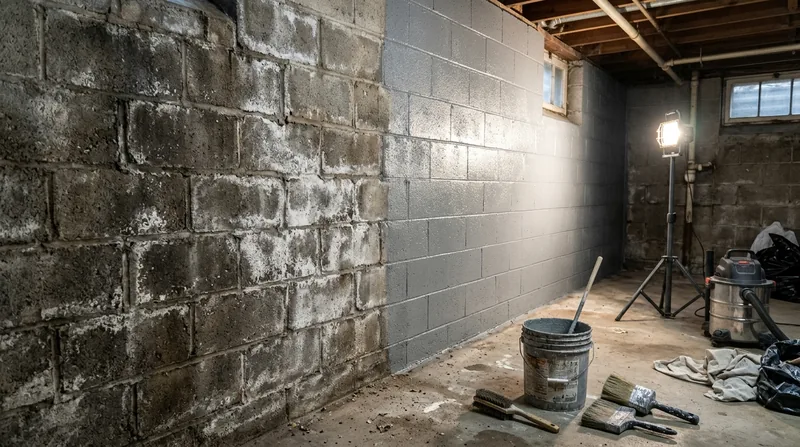




Basement Wall Sealing in Green Bay
Green Bay basements sit on glacial till and clay over Silurian dolomite, and that geology decides how water moves under your house. Downtown brick bungalows and East Side foursquares often have fieldstone or early poured walls that have been wicking moisture for a century. The 1950s ranches in Bay Beach and Ashwaubenon, and the newer poured basements in Howard and Suamico, deal with the same spring high water off the Fox River and fast runoff from summer storms. Basement Wall Sealing in Green Bay starts with an honest read on the wall, not a bucket of sealer. We prep the surface, remove efflorescence, and apply a penetrating or membrane sealer only where it will actually hold. If the real problem is hydrostatic pressure, we tell you that before you spend a dollar. Call (920) 932-4887 to set up a free basement inspection, or start with our basement waterproofing service overview.
Why Basement Wall Sealing Matters in Green Bay's Frost and Clay
Deep frost, lake-effect snow, and repeated freeze-thaw cycles work on Green Bay walls every winter. Hairline cracks open in poured walls and mortar joints in brick and fieldstone walls, and spring meltwater finds them. Glacial clay soil holds water against the foundation instead of draining it, so the wall stays damp long after the rain stops. That is the difference between surface dampness and true hydrostatic pressure, and it decides whether sealing is the right fix.
- Efflorescence on the wall is a sign that moisture is moving through the concrete and leaving mineral salts behind.
- Hairline cracks from freeze-thaw cycles let in dampness that a surface sealer can close.
- Wet spots high on the wall after a storm usually point to grading and downspouts, not the wall itself.
- Water at the cove where the wall meets the floor means the footing drain is failing, not the wall surface.
We check all four before we recommend a sealer, because sealing the wrong wall just traps the problem behind a film.
Key info: A 1920s brick foursquare in Navarino with white powder on the wall and no standing water is a good candidate for sealing. The same wall with water pushing in at the floor joint is not, and that homeowner needs an interior drain tile conversation instead.
For permit questions on any work that alters drainage, check with the City of Green Bay building department before work starts, since rules vary by jurisdiction.
How We Seal Basement Walls in Green Bay, Step by Step
We start by walking the basement and the outside grade together, because the wall and the soil are one system. We look for efflorescence, crack patterns, dampness at the cove, and how the downspouts and grading shed water. Then we choose the method that matches what we find, and we tell you plainly when sealing is not enough.
- We inspect the wall and grade, and we map every damp area and crack before any product goes on.
- We remove efflorescence and loose material so the sealer bonds to sound concrete or masonry.
- We fill and seal active hairline cracks before any surface coating goes over them.
- We apply the penetrating or membrane sealer in the coverage the wall needs, not a thin cosmetic coat.
- We correct grading and downspout extensions so roof water moves away from the wall.
If we find pressure-driven water during the inspection, we stop and explain the options rather than seal over it.
Key info: A 1960s split-level in Ashwaubenon had damp walls every spring and chalky white stains. Sealing plus downspout extensions solved it. A neighbor's ranch two streets over had water at the floor joint, and that one needed an interior drain tile system instead.
Wall Sealing Methods We Use and When Each One Fits
Not every damp wall needs the same product, and the table below shows how we match the method to the condition. We pick based on water source, wall material, and whether the wall is poured, block, brick, or fieldstone.
| Approach | Description | Best for |
|---|---|---|
| Penetrating sealer | Sinks into the concrete and blocks capillary moisture without a surface film. | Damp poured walls in 1990s Howard and Suamico basements. |
| Membrane sealer | Leaves a flexible coating that bridges hairline cracks as they move. | Block and brick walls in older Broadway and Howe homes. |
| Efflorescence removal and prep | Removes mineral salts and loose parging so any sealer can bond. | Fieldstone and early poured walls Downtown and on the East Side. |
| Crack fill before sealing | Closes active hairline cracks so the sealer is not bridging an open gap. | Walls with freeze-thaw cracking after a hard Green Bay winter. |
| Grading and downspout correction | Moves roof water away from the wall so the sealer is not fighting runoff. | Damp upper walls in Bellevue and Allouez. |
When the inspection shows pressure at the cove, we say so and point you to drain tile, not a sealer.
Basement Wall Sealing Cost in Green Bay: What to Expect
Most basement wall sealing jobs in Green Bay start around From $1,500, and that figure covers a typical basement with surface prep, efflorescence removal, and one sealer application. The number moves with wall length, wall material, how much prep the surface needs, and whether cracks have to be filled first. A fieldstone wall Downtown takes more prep than a clean poured wall in Suamico, and that shows up in the price.
We quote after we see the wall, because a phone number without an inspection is a guess. Get two or three estimates and compare what each one includes, not just the bottom line. Ask whether prep and crack filling are in the scope, and whether grading corrections are included. Our full pricing overview breaks down how we build a quote.
What to Look For When Hiring a Basement Wall Sealing Contractor Near Me in Green Bay
Sealing is a small job with a big failure mode: a contractor who coats a wet wall and leaves. Ask for proof of licensing and insurance before anyone starts, and get a certificate of insurance sent to you directly. Get at least three written estimates and compare scope line by line. Ask for references from Green Bay homeowners with the same wall type as yours, and call them.
Ask who pulls any permit if the work touches drainage, and check with the City of Green Bay building department. If your neighborhood has association rules on exterior drainage changes, confirm them before work begins. A contractor who answers these questions plainly is the one to hire. Reach us through our contact page to set up a free inspection.
Key info: In De Pere and Allouez, some older homes have had prior parging or paint on the wall. We test adhesion before sealing, because a sealer over failing paint peels within a season.
Basement Wall Sealing in Green Bay: Pricing Guide
| Service | Price | Details |
|---|---|---|
| Single wall or small basement sealing | Starting at $1,500 | Includes surface prep, efflorescence removal, and one sealer application on a typical basement wall. |
| Full basement, multiple walls | Starting at $2,400 | Covers full perimeter prep and sealing, with crack fill priced separately if active cracks are found. |
| Fieldstone or brick wall prep | On estimate | Older masonry takes more prep and repair, so we price it after an on-site look at the wall. |
| Crack fill before sealing | Starting at $350 | Fills active hairline cracks so the sealer bonds to sound concrete, priced per crack. |
| Travel | Included | In Green Bay and surrounding areas, no separate call-out or mileage fee. |
| Estimate | Free | Response within 24h at (920) 932-4887, no obligation to book. |
Indicative pricing, the exact cost depends on square footage, finish, and site access. Free personalized estimate within 24h at (920) 932-4887.


