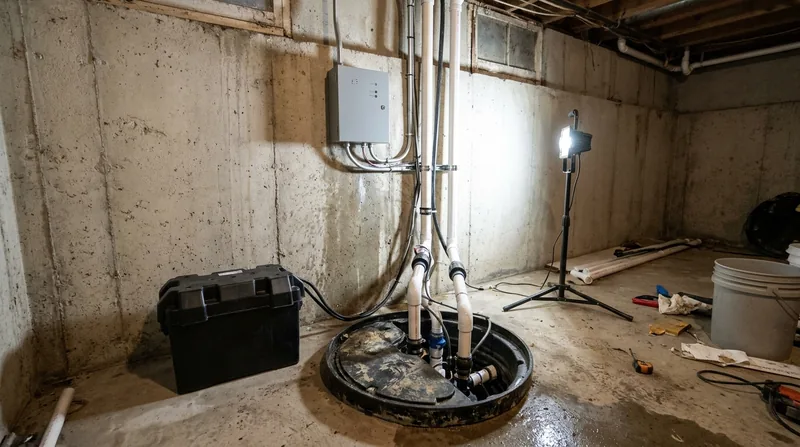




Battery Backup Sump Pumps in Green Bay
When a spring storm rolls across the bay and the power drops, your primary sump pump stops dead in the water. That is exactly when the water table is highest and your footing drain is working hardest. Battery backup sump pumps in Green Bay keep the pit dry when the grid goes down, whether the outage lasts twenty minutes or two days. Green Bay sits on glacial till and clay over Silurian dolomite, and the Fox River and Lake Michigan shore push high water toward low lots every thaw. Homes from Downtown bungalows to Howard subdivisions all face the same risk: a pump that quits during the one storm that matters. We size and install backup systems to your pit, test them under load, and show you how to check them yourself. If you already know your pump is undersized, start with sump pump installation and replacement before adding a backup.
Why Battery Backup Sump Pumps Matter in Green Bay's Basements
Green Bay gets deep frost, lake-effect snow, and fast summer runoff. When that snow melts in March and April, the ground is still frozen a foot down, so meltwater runs overland and finds every seam in fieldstone and early poured walls. Add a power outage from an ice storm or a summer squall and a single-pump basement floods within hours. The older housing stock Downtown, on the East Side, and in Navarino is especially exposed because those basements were never designed for the water volume modern storms deliver.
- Spring thaw and heavy rain fill footing drains faster than a single pump can move water.
- Freeze-thaw cycles open hairline cracks that let water in right when the pump is most needed.
- Older fieldstone and dolomite block walls in Navarino and Downtown seep under hydrostatic pressure.
- Power outages from ice and wind storms hit Green Bay every winter, often during active pumping.
- Finished basements in Broadway and Howe Cape Cods turn a pump failure into a gutted room.
A backup pump does not replace your primary pump. It buys you time when the primary fails or the power dies, and that time is what keeps a wet basement from becoming a torn-out one.
Key info: A 1950s ranch in Ashwaubenon with a partly finished basement lost power for nine hours during a March ice storm. The primary pump had been cycling every four minutes. Without a backup, the pit would have overflowed in under two hours.
For official guidance on electrical and plumbing work in the city, check the City of Green Bay building department pages before you schedule any installation.
How We Install a Backup System That Actually Works
We start by looking at your existing pit, pump, check valve, and discharge line. A backup pump that shares a discharge line with the primary needs a proper wye fitting and separate check valves, or the two pumps fight each other. We size the battery to your pump's draw and to how often your pump runs during a storm, not to a generic chart. Then we test the whole system under a simulated outage before we leave.
- We inspect the sump basin, measure pit depth and diameter, and check the primary pump's age and flow rate.
- We verify the discharge line route and confirm the check valve holds.
- We mount the backup pump and battery box on a shelf or stand clear of rising water.
- We wire the float switch and alarm, then test the backup with the primary unplugged.
- We show you how to run a monthly test and what a weak battery sounds like.
If your pit is too small or your discharge line is undersized, we tell you that before we sell you a battery. Sometimes the right answer is a interior drain tile system that moves water to the pit faster, paired with a backup that can keep up.
Key info: In Suamico subdivisions with poured full basements, we often find the primary pump discharging into a line that freezes at the exterior wall in January. We reroute the discharge and add a backup with a sealed battery box rated for cold, so the system works in February, not just July.
Backup Pump Options We Install
Not every basement needs the same setup. A small pit in a Downtown bungalow with a shallow basin calls for a compact backup, while a deep poured pit in Howard with a high water table may need a higher-capacity unit and a second battery. Here is how the main approaches compare.
| Approach | Description | Best for |
|---|---|---|
| Battery backup pump in existing pit | A DC pump and float switch mounted beside the primary pump, sharing the discharge line through a wye fitting. | Homes with a working primary pump and a standard pit. |
| Backup with dedicated discharge | A separate discharge line routed to a freeze-safe exit, with its own check valve. | Basements where the shared line freezes or backs up in winter. |
| High-capacity backup and dual battery | A larger DC pump with two batteries for longer runtime during extended outages. | High water table lots in Howard and Suamico where the pump runs often. |
| Backup plus alarm and maintenance plan | A backup pump with a high-water alarm and an annual test and battery check. | Owners who travel or want the system checked before spring thaw. |
| Backup tied to a new primary pump | A matched primary and backup pair installed together with new piping and check valves. | Pits with an aging primary pump or a history of failures. |
We match the option to your pit and your water volume, not to a sales target. If a simple battery backup is enough, that is what we install.
Battery Backup Sump Pumps Cost in Green Bay: What to Expect
Most homeowners want a real number before they book. A basic battery backup system starts at $900 installed, including the pump, float switch, battery, and a test under load. That figure moves with the size of the pit, the capacity of the backup pump, whether we need a dedicated discharge line, and how far the battery box has to be mounted from the pit. A high-capacity unit with dual batteries for a high water table lot in Howard will run higher than a compact unit for a Downtown bungalow.
We give you a written scope before we start, and we do not add line items you did not approve. Getting two or three estimates is smart, and we will not pressure you to skip that step. Compare what each quote includes: battery, alarm, check valve, discharge work, and testing. A low number that leaves out the battery is not a real number.
For a fuller breakdown of what different scopes run in this market, see our pricing overview. If your primary pump is also near the end of its life, ask for a combined quote so you are not paying twice for the same pit visit.
Choosing a Waterproofing Contractor Near Me in Green Bay
Anybody can sell you a battery and a pump. The difference is in the sizing, the discharge routing, and whether the installer tests the system before leaving. Ask for proof of licensing and insurance, and ask whether the company carries a transferable warranty on the work. Green Bay area homeowners should also confirm that the contractor pulls the right permits when the job alters drainage or the sump discharge connection, because rules vary by jurisdiction and the local building department has the final word.
Check references from jobs like yours, especially homes of similar age and wall type. A contractor who works on 1920s fieldstone basements in Navarino every week will spot a failing pit faster than a general handyman. And get the scope in writing, including the battery model and the test procedure.
We are a dedicated basement waterproofing specialist, not a general foundation firm and not a plumber. That focus is why we can tell you plainly when a backup pump is the right fix and when the real problem is hydrostatic pressure that needs a drain tile system first. Call us at (920) 932-4887 or request a free estimate and we will walk your basement with you.
Battery Backup Sump Pumps in Green Bay: Pricing Guide
| Service | Price | Details |
|---|---|---|
| Basic battery backup system | Starting at $900 | Includes DC backup pump, float switch, battery, and load test; pit depth and pump capacity move the price |
| Backup with dedicated discharge line | Starting at $1,250 | Separate freeze-safe discharge and check valve; line length and exit point drive the added cost |
| High-capacity dual battery system | Starting at $1,600 | Larger pump and two batteries for extended outages; water table and pump run frequency set the size |
| Backup plus new primary pump | On estimate | Matched pair with new piping and check valves; existing pit condition and primary pump age determine scope |
| Travel | Included | In Green Bay and surrounding areas, no separate call-out or mileage fee |
| Estimate | Free | Response within 24h at (920) 932-4887, no obligation to book |
Indicative pricing, the exact cost depends on square footage, finish, and site access. Free personalized estimate within 24h at (920) 932-4887.


