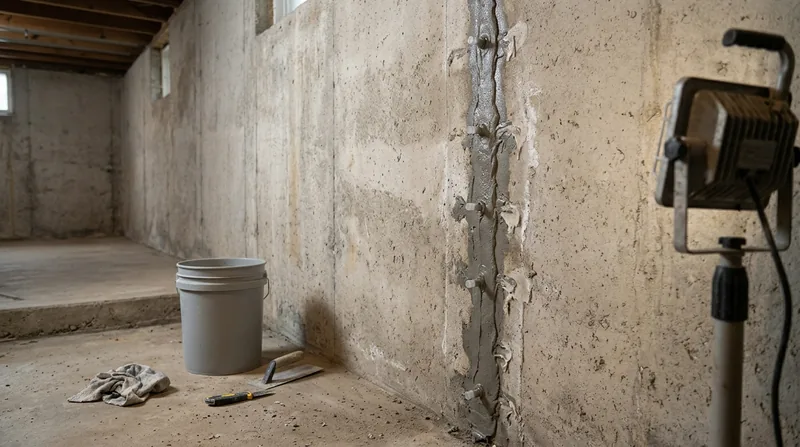




Foundation Crack Repair in Green Bay
When you need Foundation Crack Repair in Green Bay, you need a straight answer about what is causing the crack and what it will take to stop it. Green Bay sits on glacial till and clay over Silurian dolomite, the same limestone ridge that runs under the Niagara Escarpment, so water moves through seams and fractured rock under many lots. The housing stock tells the story: fieldstone and early poured walls in 1900s-1930s bungalows Downtown, the East Side and Navarino, brick colonials in Broadway and Howe, and poured full basements in the 1990s-2020s subdivisions out in Howard, Suamico and Ledgeview. Deep frost, lake-effect snow and hard freeze-thaw cycles open hairline cracks, and spring high water off the Fox River and the Lake Michigan shore pushes hydrostatic pressure against those walls. We inspect every crack and match it to the right repair method instead of a one-size-fits-all patch. If you are still deciding between sealing and a drainage fix, start with a basement waterproofing assessment.
Why Foundation Cracks Open in Green Bay's Clay and Dolomite Ground
The dominant failure mode here is not a defective wall. It is the seasonal swell and settle of glacial clay soil combined with frost movement, and that is what opens and reopens cracks in Green Bay basements. Clay holds water against the wall, frost drives it deeper, and the wall flexes. On lots over fractured dolomite, water also finds seams in the rock and shows up at the footing with no obvious surface source.
- Hairline vertical cracks in poured walls often appear after the first hard freeze and widen through spring thaw.
- Fieldstone and early poured walls in older Downtown and Navarino basements develop mortar and seam cracks that let water track inward.
- White efflorescence on the wall face tells you water is moving through the concrete and evaporating inside.
- Stair-step cracks in block walls and horizontal cracks in any wall point to movement that needs a structural look, not just injection.
- Fast summer storm runoff fills footing drains and raises pressure against walls that were dry all winter.
Sorting a shrinkage crack from a movement crack is the first job on every call, and it decides whether you need injection or a structural repair.
Key info: A 1920s brick colonial in Howe with a hairline vertical crack and light efflorescence is a typical injection job. The same crack pattern in a Shorewood split-level with a wet floor and a sump that runs constantly usually means hydrostatic pressure, and the crack is a symptom, not the whole problem.
Structural foundation repair and work that alters drainage commonly require a permit in Wisconsin, and thresholds vary by jurisdiction. Verify the current rules with the City of Green Bay building inspection office before work begins: greenbaywi.gov.
How We Diagnose and Repair a Crack in a Green Bay Foundation
We start below grade and work outward from the crack itself. The goal is to identify whether water is entering through the crack only, or whether the wall is being loaded by saturated clay and a failed footing drain. That distinction decides the method, the cost and whether injection alone will hold.
- We walk the basement and map every crack, noting width, direction, moisture and efflorescence.
- We check grading, downspout extension and window wells on the outside to see where water is being fed toward the wall.
- We test for active moisture and look at the footing drain and sump behavior during and after rain.
- We recommend epoxy injection for stable non-structural cracks, polyurethane injection for cracks that are seeping or may move, or a structural option for wide or shifting cracks.
- We set injection ports, flush the crack, inject under pressure and finish the surface so the repair is clean and verifiable.
Every recommendation comes with a plain explanation of what the repair does and what it does not do.
Key info: In a 1950s ranch in Ashwaubenon, a seeping crack near the floor line was injected with polyurethane, but the real fix was extending two downspouts and correcting grading that sent roof water straight to the wall. Sealing the crack without fixing the water source would have brought the same call back the next spring.
When the inspection shows water entering at the wall-floor joint across a long run, an interior drain tile system is often the better answer than chasing individual cracks.
Crack Repair Methods We Use Below Grade
Not every crack gets the same treatment. We match the method to the crack type, the wall material and whether the wall is moving.
| Approach | Description | Best for |
|---|---|---|
| Epoxy injection | Structural epoxy bonds the crack faces back together and restores wall strength. | Stable, non-seeping vertical cracks in poured walls |
| Polyurethane injection | Flexible foam expands into the crack and stays sealed if the wall moves slightly. | Seeping cracks, wet joints and cracks that may move |
| Surface sealing and parging | We clean and seal the wall face where the crack is minor and the source is controlled. | Minor seepage on older fieldstone and block walls |
| Structural repair | Carbon fiber straps or wall anchors stabilize a wall that is bowing or shifting. | Horizontal cracks, stair-step cracks and bowing walls |
| Drainage correction | We address the water source with grading, downspout extension or drain repair. | Cracks that return because pressure was never relieved |
If a wall is bowing rather than just cracked, the repair plan changes, and bowing wall repair is the right starting point.
Foundation Crack Repair Cost in Green Bay: What to Expect
Most single-crack injection work starts from $450, and that figure covers the typical hairline or narrow vertical crack in a poured wall. The price moves up with crack length, wall thickness, access, and whether the crack is seeping or the wall is showing movement. A fieldstone wall in Navarino takes more prep than a clean poured wall in Suamico.
Factors that change the number include the number of cracks, whether the basement is finished, how tight the work area is, and whether we find a drainage problem that has to be corrected for the repair to hold. Getting two or three estimates is smart, and so is asking each contractor what method they plan to use and why. Our full pricing overview lays out the ranges we work from.
Be cautious with a quote that is far below the others and does not include a moisture check or a look at grading. A patch over a wet crack is money spent twice.
Foundation Crack Repair Near Me: How to Choose a Contractor Near Green Bay
You want a contractor who inspects before quoting and can explain the difference between a crack that needs sealing and a wall that needs stabilization. Ask whether they are licensed and insured, and ask to see the certificate. Ask for local references on jobs similar to yours, especially older brick and fieldstone basements.
- Confirm the company carries liability insurance and workers' compensation coverage before work starts.
- Get at least two or three written estimates that name the repair method, not just a price.
- Ask who pulls the permit if structural repair or drainage changes are involved, and verify the rule with the local building department.
- Ask how they will protect finished basement surfaces and how they clean up injection residue.
- Read the warranty terms and confirm they are transferable if you sell the home.
A contractor who welcomes questions and puts the method in writing is the one to hire.
To set up an inspection, reach us through our contact page or call (920) 932-4887.
Foundation Crack Repair in Green Bay: Pricing Guide
| Service | Price | Details |
|---|---|---|
| Single crack epoxy injection | Starting at $450 | Covers one typical vertical crack in a poured wall, including port setup and cleanup |
| Polyurethane injection for seeping crack | Starting at $550 | Flexible foam seal for an active leak, priced by crack length and wall thickness |
| Multiple crack package | On estimate | Priced per crack once we map the wall and confirm which cracks are active |
| Structural repair (carbon fiber or anchors) | On estimate | Requires on-site evaluation of wall movement, soil load and footing condition |
| Travel | Included | In Green Bay and surrounding areas, no separate call-out or mileage fee |
| Estimate | Free | Response within 24h at (920) 932-4887, no obligation to book |
Indicative pricing, the exact cost depends on square footage, finish, and site access. Free personalized estimate within 24h at (920) 932-4887.


