The Geologic Backstory: How Glacial Clay and Dolomite Shape Green Bay Foundations
If you live in Green Bay, your home sits on ground shaped by forces far older than any neighborhood. During the last ice age, glaciers retreated across northeastern Wisconsin, leaving behind thick deposits of glacial till and expansive clay. Beneath that clay lies dolomite bedrock, a hard carbonate rock that weathers unevenly and creates natural fissures over time. This combination is not just a geological curiosity; it is the root cause of many Foundation Waterproofing challenges homeowners face today.
The clay layer is the troublemaker. Wisconsin clay soil has a high shrink-swell capacity, meaning it expands dramatically when wet and contracts just as sharply when dry. Through a typical Green Bay year, with wet springs and dry late summers, that clay can move inches, not millimeters. Your foundation was poured to sit stable, but it is being pushed and pulled from all sides. Add in the dolomite bedrock below, which restricts drainage and forces water to find the path of least resistance, and you have a recipe for Basement Waterproofing problems that repeat unless the soil behavior is addressed.
Why Green Bay Foundation Cracks Keep Coming Back
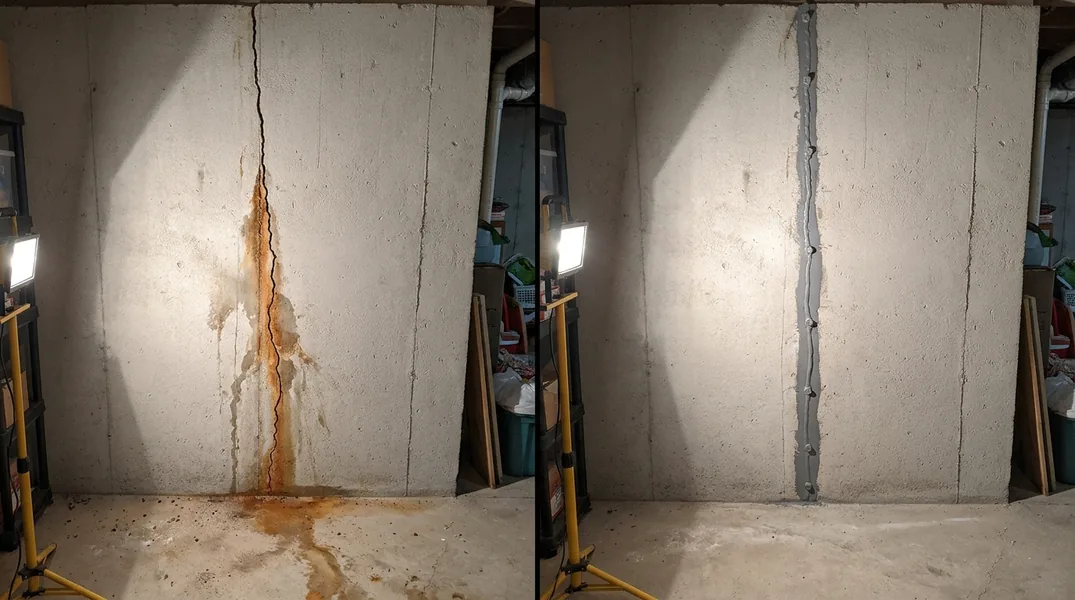
Homeowners often tell us they have patched the same crack three or four times. That is because the crack is a symptom, not the disease. When expansive clay pushes against a foundation wall, it creates lateral pressure that concrete was not engineered to resist indefinitely. Hairline cracks widen into structural fissures. Meanwhile, the dolomite bedrock beneath can prevent proper drainage, so hydrostatic pressure builds under the footing. The result is Green Bay foundation cracks that seem to appear overnight after a heavy rain.
Soil movement is relentless here. In De Pere and Ashwaubenon, we see the same pattern: foundations poured decades ago now showing stair-step cracking, bowing walls, and horizontal cracks near the frost line. These are not cosmetic. They are the soil telling you it is winning. Ignoring them invites water intrusion, mold, and eventually structural compromise. The key is to stop the movement, not just seal the surface.
Dolomite Bedrock Basement Leaks: The Hidden Water Highway
Dolomite bedrock basement leaks are common in the Green Bay area because the rock itself is not a solid barrier. Dolomite dissolves slowly over time, creating voids and channels that hold and redirect groundwater. When heavy rain saturates the clay above, that water perches on the bedrock and then seeks cracks in your foundation. Many homeowners are surprised to find water entering at the cove joint, where the floor meets the wall, even when the walls look dry. That is classic bedrock-influenced hydrostatic pressure.
This is why simple surface repairs fail. The water is not coming from the sky directly; it is coming from below and from the saturated clay pushing against your foundation. An Interior Drain Tile System can capture that water at the cove joint and redirect it before it reaches your finished space, but the best defense often includes addressing the exterior side as well. In areas like Allouez, where older homes sit close to the bedrock, we frequently recommend a combined approach to manage both soil pressure and water volume.
Basement Waterproofing Near Me: When to Call a Pro in Green Bay
Not every damp basement requires a full excavation, but some do. The trick is knowing the difference. If you see efflorescence (white chalky stains), musty odors, or water seeping after storms, you have a leak. If you see horizontal cracks, bowing walls, or doors that stick, you have soil movement affecting the structure. These are different problems with different solutions, and a one-size-fits-all patch kit will not solve either. A professional assessment can tell you whether you need interior drainage, exterior waterproofing, or foundation repair.
When you search for basement waterproofing near me in Green Bay, look for a contractor who understands the local geology. Ask how they account for expansive clay and dolomite bedrock. Ask whether they use Exterior Basement Waterproofing to relieve soil pressure or interior systems to manage water. The right answer depends on your specific site, but the conversation itself tells you whether the contractor is thinking beyond a quick sale. If you are unsure, call Green Bay Waterproofing at (920) 932-4887 for a straight assessment of what your foundation is dealing with.
Basement Waterproofing Cost in Green Bay: What to Budget
Homeowners often ask for a ballpark before they call. The honest answer is that cost depends on the cause and the extent of the damage. A localized crack repair is far less expensive than a full perimeter drain tile system. Exterior waterproofing involves excavation and membrane application, which costs more than interior drainage but addresses soil pressure directly. Foundation repair for bowing walls is a separate scope and often the largest investment. For a realistic look at ranges, see our pricing page, but treat any online number as a starting point, not a quote.
The bigger cost is waiting. A small leak that goes unaddressed can rot framing, ruin insulation, and lead to mold remediation that dwarfs the waterproofing bill. In Green Bay's climate, with freeze-thaw cycles that widen cracks, time is not on your side. We recommend getting a free estimate as soon as you notice symptoms, even if you are not ready to schedule work. Understanding the problem early gives you options and helps you budget without pressure.
Protecting Your Home from Wisconsin Clay Soil and Soil Movement
There are steps you can take between now and a professional visit. Keep gutters clean and extend downspouts at least six feet away from the foundation. Grade the soil around your home so it slopes away, not toward, the walls. Avoid planting large trees too close to the foundation, as roots can exploit cracks and worsen soil movement. These measures help, but they do not reverse the underlying pressure from expansive clay and dolomite bedrock. Think of them as maintenance, not a cure.
The real solution is a waterproofing system designed for this region. That might mean interior drainage with a sump pump, exterior membrane and drainage board, or a combination. It might also mean addressing foundation cracks with structural reinforcement rather than filler. Green Bay Waterproofing focuses on the cause, not just the symptom, because we have seen too many homeowners pay twice for the same leak. If you are ready to stop guessing, reach out for a free estimate or call (920) 932-4887. Your foundation is dealing with geology; you deserve a plan that accounts for it.
Looking for a professional basement waterproofing contractor in Green Bay? Green Bay Waterproofing responds fast for all your basement waterproofing needs.
Get a Free QuoteOur services: Basement Waterproofing · Interior Drain Tile System · Exterior Basement Waterproofing