Why Older Homes in Green Bay Face Unique Foundation Challenges
Homes built before the 1980s in Green Bay were often constructed with materials and methods that simply were not designed to handle today's freeze-thaw cycles and heavy spring snowmelt. Many of these homes have poured concrete or block foundations that have spent decades absorbing moisture from the clay-heavy soil common throughout the region. As the ground expands and contracts with the seasons, the pressure against those older walls gradually increases, and small weaknesses can turn into serious structural issues.
If you own an older home on the East Side or in established neighborhoods like Allouez, you may already be seeing subtle clues that your foundation is under stress. The good news is that foundation problems signs are usually visible long before a wall fails, provided you know where to look. Understanding what to watch for below grade can save you from costly emergency repairs and help you plan ahead with confidence.
Basement Wall Cracks: What They Mean and When to Worry
Not every crack in a basement wall is an emergency, but in older homes, the type and location of a crack tells a story. Hairline vertical cracks are often caused by concrete shrinkage during the curing process and may be relatively benign. However, horizontal cracks, stair-step cracks in block walls, and cracks that widen over time are red flags for structural movement or soil pressure. If you can fit a dime into a crack or if you notice moisture seeping through it, that is your cue to bring in a professional for an assessment.
Basement wall cracks in older Green Bay homes frequently appear along the mortar joints of block foundations, especially on the side of the house facing the prevailing weather. These cracks allow water to enter during heavy rain or rapid snowmelt, which can lead to mold, efflorescence (the white powdery residue on walls), and eventual weakening of the foundation. Addressing these cracks early with proper Foundation Waterproofing is far less expensive than repairing a failed wall later. A thorough inspection can determine whether the cracks are cosmetic or a symptom of a deeper problem.
Bowing Basement Walls and Other Structural Warning Signs
A bowing basement wall is one of the most serious foundation problems signs a homeowner can encounter. It typically happens when hydrostatic pressure from saturated soil pushes inward against the wall, causing it to lean or curve. In older homes, this is often accompanied by horizontal cracking near the middle of the wall and sticking doors or windows on the floors above as the structure shifts. If you notice a wall that is no longer plumb or you can see a visible curve when you look along its length, it is time to act quickly.
Other structural clues include gaps between the foundation and the framing, uneven floors, and cracks in the drywall or plaster on the main level. These issues often point back to foundation movement rather than a problem with the finish materials themselves. In neighborhoods like De Pere, where many homes date back several decades, bowing walls are a common finding during basement inspections. A professional can recommend solutions such as wall anchors or carbon fiber reinforcement to stabilize the wall before the problem worsens.
Moisture, Mold, and Musty Odors Below Grade
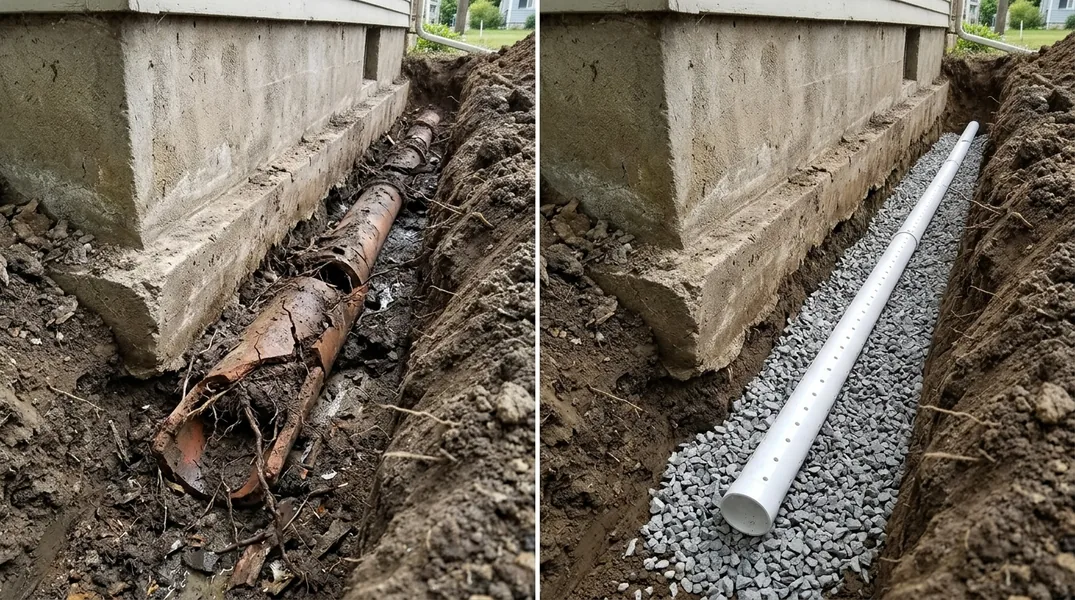
Persistent dampness in a basement or crawl space is more than a comfort issue; it is a sign that water is finding its way in. Musty odors, visible mold growth, and condensation on pipes or walls all suggest elevated humidity levels that can damage stored belongings and affect indoor air quality. In older homes, the original waterproofing (if any) has likely degraded, and the drain tile system may be clogged or collapsed. Even a small amount of water intrusion can create conditions for mold to thrive within 24 to 48 hours.
If you are noticing these issues, an Interior Drain Tile System can capture water before it reaches your living space and direct it away from the foundation. Combined with a vapor barrier and proper grading outside, this approach addresses both the symptom and the source. For homes where exterior soil pressure is the main culprit, Exterior Basement Waterproofing may be the more appropriate long-term fix. The right solution depends on your home's specific conditions, which is why a professional evaluation is so important.
Foundation Problems Signs Near Me: When to Call a Green Bay Professional
If you have spotted any of these warning signs, it is worth getting a professional opinion sooner rather than later. Foundation problems tend to worsen over time, and what starts as a hairline crack or a slightly damp corner can escalate into a structural issue that affects the entire house. A qualified contractor can assess the severity of the problem, explain your options, and provide a clear plan of action. Waiting only increases the risk of more extensive and expensive repairs down the road.
Green Bay Waterproofing offers free estimate appointments for homeowners throughout the area. Whether you are dealing with basement wall cracks, a bowing wall, or unexplained moisture, our team can help you understand what is happening below grade and what it will take to fix it. We also provide transparent pricing so you can make an informed decision without surprises. Call (920) 932-4887 today to schedule your inspection and take the first step toward protecting your home's foundation.
Looking for a professional basement waterproofing contractor in Green Bay? Green Bay Waterproofing responds fast for all your basement waterproofing needs.
Get a Free QuoteOur services: Basement Waterproofing · Interior Drain Tile System · Exterior Basement Waterproofing